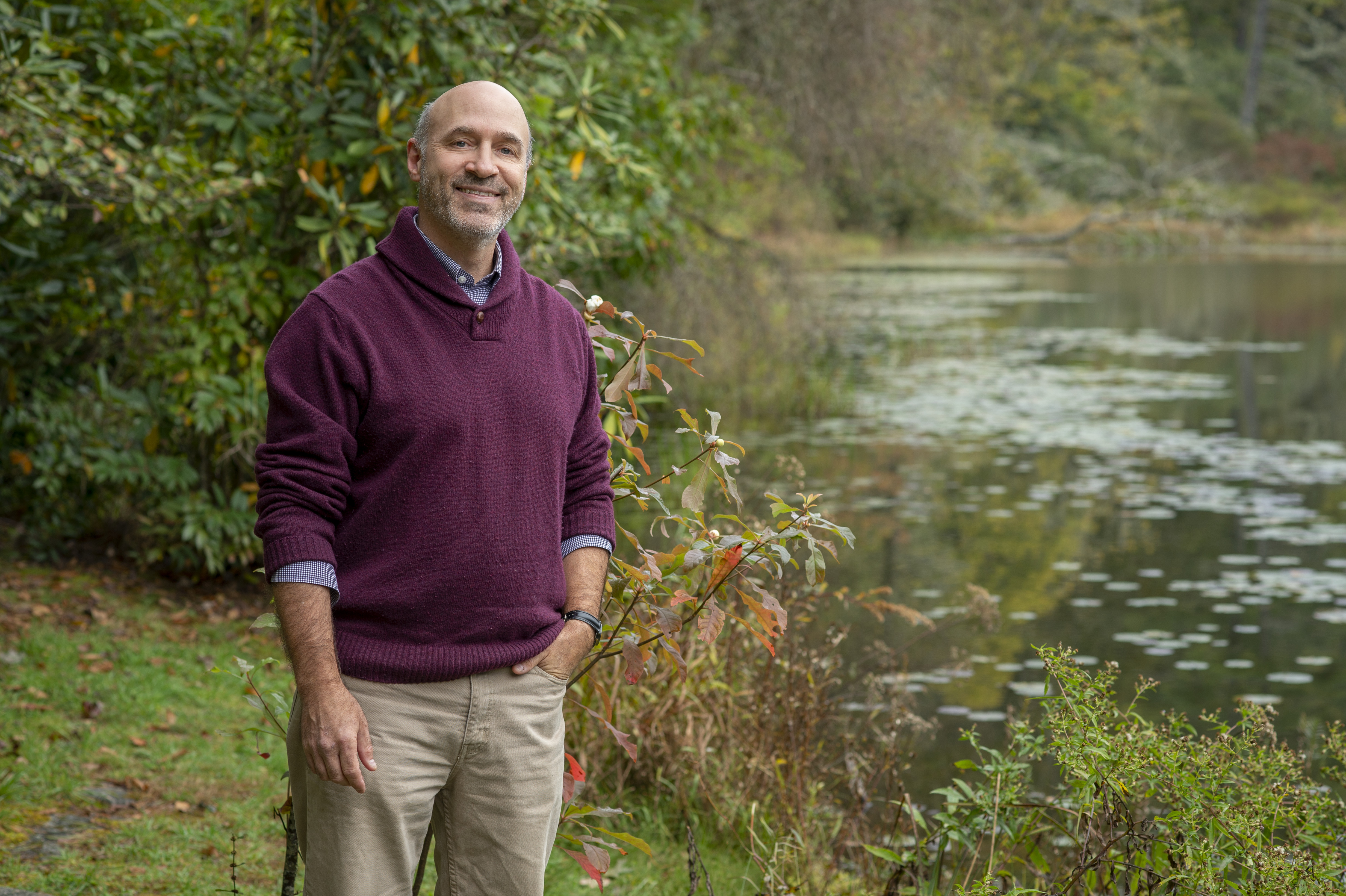
WCU’s Jim Costa receives $100K grant to help Highlands Biological Station rebuild after Hurricane Helene
Ìð¹ÏÊÓƵapp’s Highlands Biological Station is a haven for native plant and animal species. Carnivorous pitcher plants line the shore of the lake and trap unsuspecting insects, while pollinators dance across the firework-like eruptions of the red petals of Bee Balm, and the delicate, drooping white flowers of Oconee Bell hide in the shade along the trails.
Alongside the lake, the wetland bog provides ideal conditions for not just plants, but also the endemic species of salamanders.
Yet the wet and rainy conditions that are vital to this delicate climate jeopardized a lot of these species in the aftermath of Hurricane Helene in 2024. The Biological Station fared much better than many of the worst-hit areas of Western North Carolina, but several downed trees, erosion, and flooding caused by the rain damaged this vital habitat.
With the help of a $100,000 grant from the North Carolina Science Museum, the Biological Station can repair these damages and prepare for future extreme weather events.
“We're trying to promote a diversity of native wildflowers, flowering shrubs, and various other species,� said Jim Costa, executive director of the Highlands Biological Station and professor of biology for the past 20 years. “If you have constant impacts from severe stormwater runoff, that’s a real problem.�
As executive director, Costa moves between teaching, conducting his own research at the station, programmatic planning for the public, and facilities improvements.
As part of the continuous operations to further improve the property, the Grounds Advisory Committee, made up of volunteers in the community, has already begun work to improve stormwater management, soil erosion, and the visitor experience. This work included the construction of interpretive signage for visitors to read about native plants and ecology. However, these signs were damaged by downed trees and branches along with one of the dormitory buildings on the property.
Now the grant can help cover the costs to repair the dormitory so that the Biological Station can accommodate researchers and rebuild the interpretive signs to continue to educate the public. In addition, past conceptual plans by landscape architects to improve stormwater drainage can move forward into a more formal design.
“Erosion affects us in different ways, but especially sedimentation into our lake,� Costa said. “Our wetlands associated with the lake here are the home to a number of rare and threatened species and anything that we can do to help mitigate the input of sedimentation are going to improve ecological health.�
These improvements not only allow HBS to continue to offer educational experiences to WCU students and the public but allow researchers to better understand these diminishing and vital habitats that are a haven for native plant and animal species. This recovery funding will allow HBS to continue to serve as stewards of the natural beauty of the region, whether they are caring for something as large as some of the oldest remaining Eastern Hemlock trees in the country on the property or as small as a milkweed plant.
“It's not easy to find funding to make these kinds of improvements, but there's real conservation, educational, and recreational benefits to the public,� Costa said. “This helps us ensure the populations of wildflowers and other native plants can grow best, can thrive in this environment.�